
Hardware-only Electronic Music - A Dawless Perspective
[ Dawless Electronic Music Hardware Setup Studio Synthesizers Mixer ]
What if you built yourself a spaceship…
and that spaceship just happened to play music?
Friends, I’d like to share with you my perspective on electronic music production; a dawless perspective. If you’ve been around a while making music, you know opinions on electronic music production are everywhere; there’s easily your pick of producers out there who will shed their light on your efficiency/sound/composition/whatever. You could stage dive right now (the stage is in your mind) and you’d hit at least 15 producers who’ve got advice for you no matter what DAW (aka music software) you use.
I’m not that producer. In fact, the way I go about making electronic music is not guaranteed to yield the “best” results. My style is also not the cheapest nor is it the most efficient. This style is full of limitations. I might even go as far as arguing that my style is… uh… complicated.
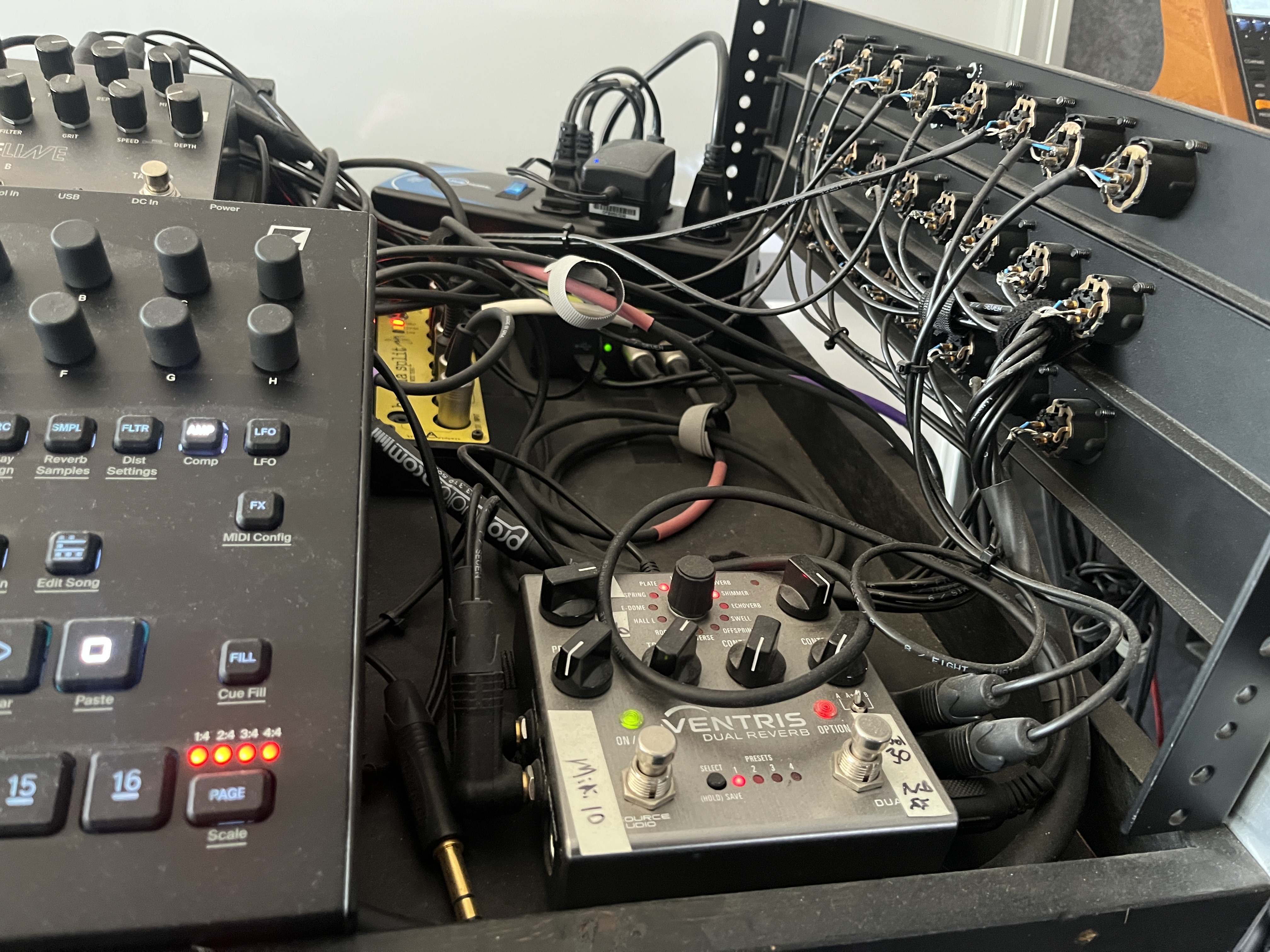
The secret is in the cables.
I have soldered so many.
So many.
[ Synthesizer Cables Patch Bay Dawless Setup Wiring Close Up ]
The secret is in the cables. I have soldered so many. So many.
Art was never supposed to be about what’s “easy” or the “best”. And as it would turn out, I quite enjoy complexity. This might also just be my opinion, but I think this style of electronic music is crazy fun too. But enough with all this tension, what am I even talking about?
The production/performance style I am describing to you is coming to be known as dawless electronic music. In this style the musician works exclusively with tools designed specifically for audio and they forgo “general purpose” tools, specifically a DAW (at least until they’re ready to make a record).
Tl;dr: dawless means producing electronic music without your computer and instead you use physical synthesizers, samplers, effects, and stuff like that.
Whatever you do in this style, there’s always an aspect of dawless electronic music that is live. I don’t necessarily mean that you’re a virtuoso synth lord either as knobs, faders, buttons, levers, and even food items are among the means a dawless producer has to perform their music. Without a musician doing something to drive the music the music simply does not happen. Impractical as it may be for some musicians to cart their gear around, I think there’s magic when music is tethered to real-time’s soft embrace that makes it worth it.
Maybe it never occurred to you to leave your laptop turned off when you jam. It turns out doing so is quite liberating.
From DAW to Dawless
DAW - d’All We’ve Ever Known
[ Vintage Computer Cubase Atari ST Electronic Music Setup ]
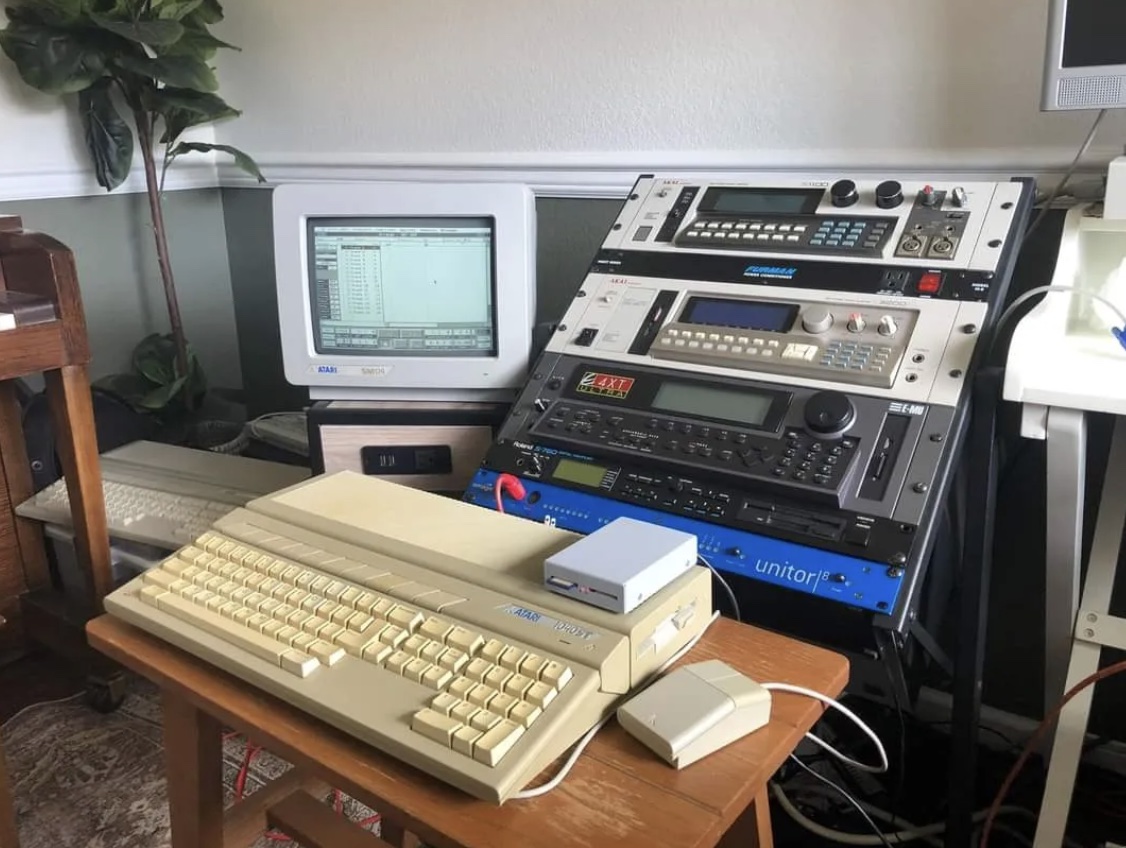
Cubase was just a sequencer in those days; not quite what we would call a DAW today. Still, there’s a computer, mouse, and key board - I think my point stands.
Okay okay okay, I bet you’re probably wondering why not having a computer around is such a big deal for electronic music. For most electronic music genres out there, there has literally never existed a time where that music was created without some form of DAW. Seriously, go ask someone who produced edm in the 90s, they’ll probably tell you about their super cool Atari ST running Cubase. For many genres there is literally not a time where DAWs weren’t the center of that music’s creation.
Cubase was just a sequencer in those days; not quite what we would call a DAW today. Still, there’s a computer, mouse, and keyboard - I think my point stands.
Computers have been part of the electronic music landscape for a very long time and they really do make music production a lot easier/possible. When you choose to make music without a DAW you have to figure out what components of those systems you need to reproduce for your playstyle. Since you can’t use a computer, everything you’re doing musically has to run through a piece of audio equipment and somehow make it to some speakers somewhere. Each piece of audio equipment is gonna need physical space, audio cabling, electricity (and occasionally dusting lol). And each piece of gear is going to enforce its own constraints on your music.
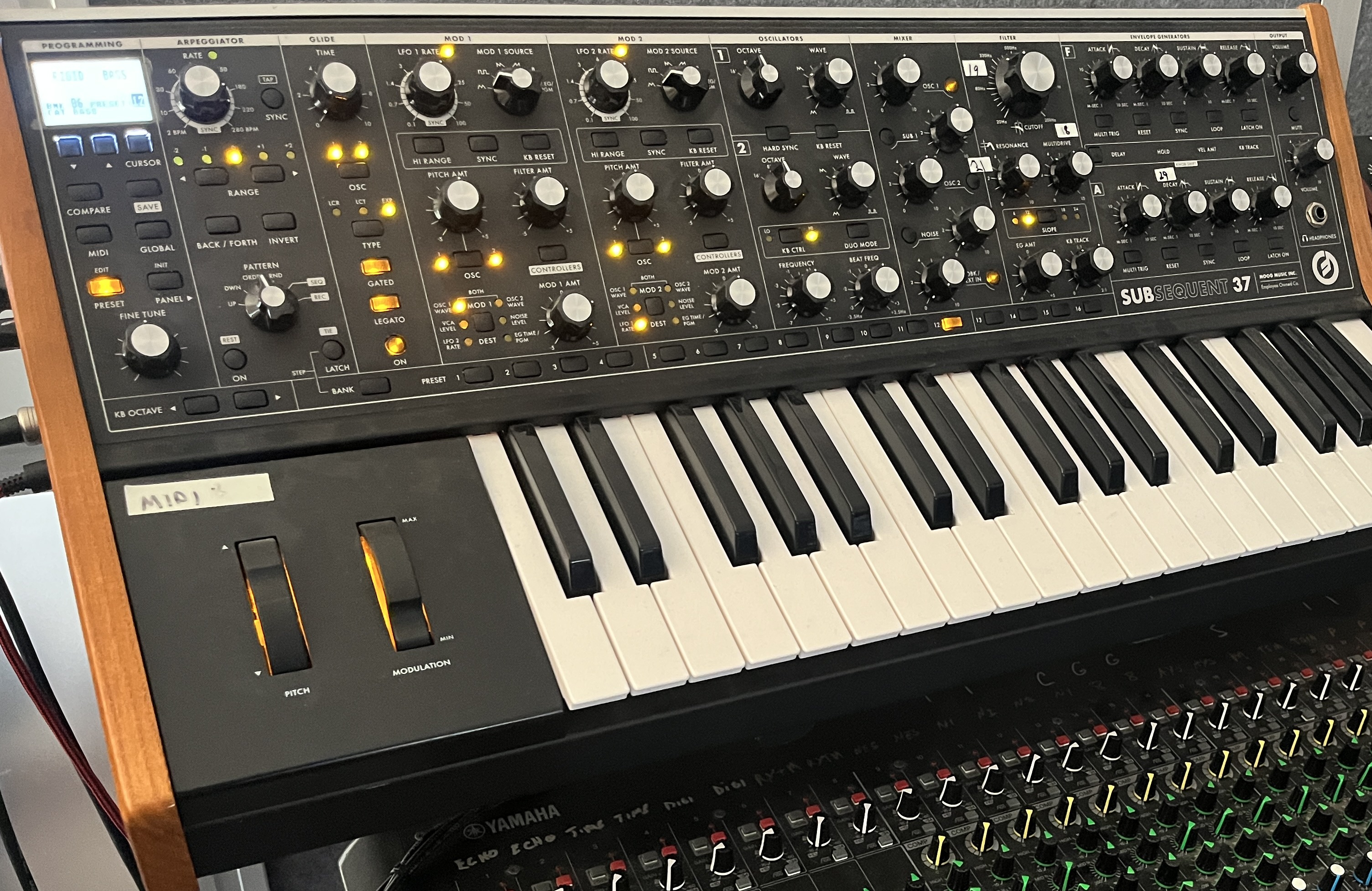
Sometimes you’ve got to ask yourself the hard questions, “Should my sub be analog, FM, AY3 or MOS 6581?”
After all… there’s only one Moog, better use it wisely.
[ Analog Synthesizer Keyboard Knobs Live Performance Dawless ]
Sometimes you’ve got to ask yourself the hard questions, “Should my sub be analog, FM, AY3 or MOS 6581?”
Electronic Musicians within the Performance
Importantly, when you give up the DAW you also have to think about where you fit into how your music is performed in new ways. Before the DAW would perform the music, maybe via midi programming, process the sound, and deliver your track (perhaps to then be played by a DJ). Once you’ve given up the DAW it is on you to figure out the best way to use your hands (and/or feet) to deliver a compelling performance to your audience. Suddenly your performance isn’t just another dj set but instead is a custom performance of controls built for you (by you).
Consider these possibilities for how you can make your music:
● You finally put those piano lessons to use and go full synth lord, maybe with some backing tracks you pre-program.
● You improvise into a looper and then have midi controls to manipulate your looper and other effects.
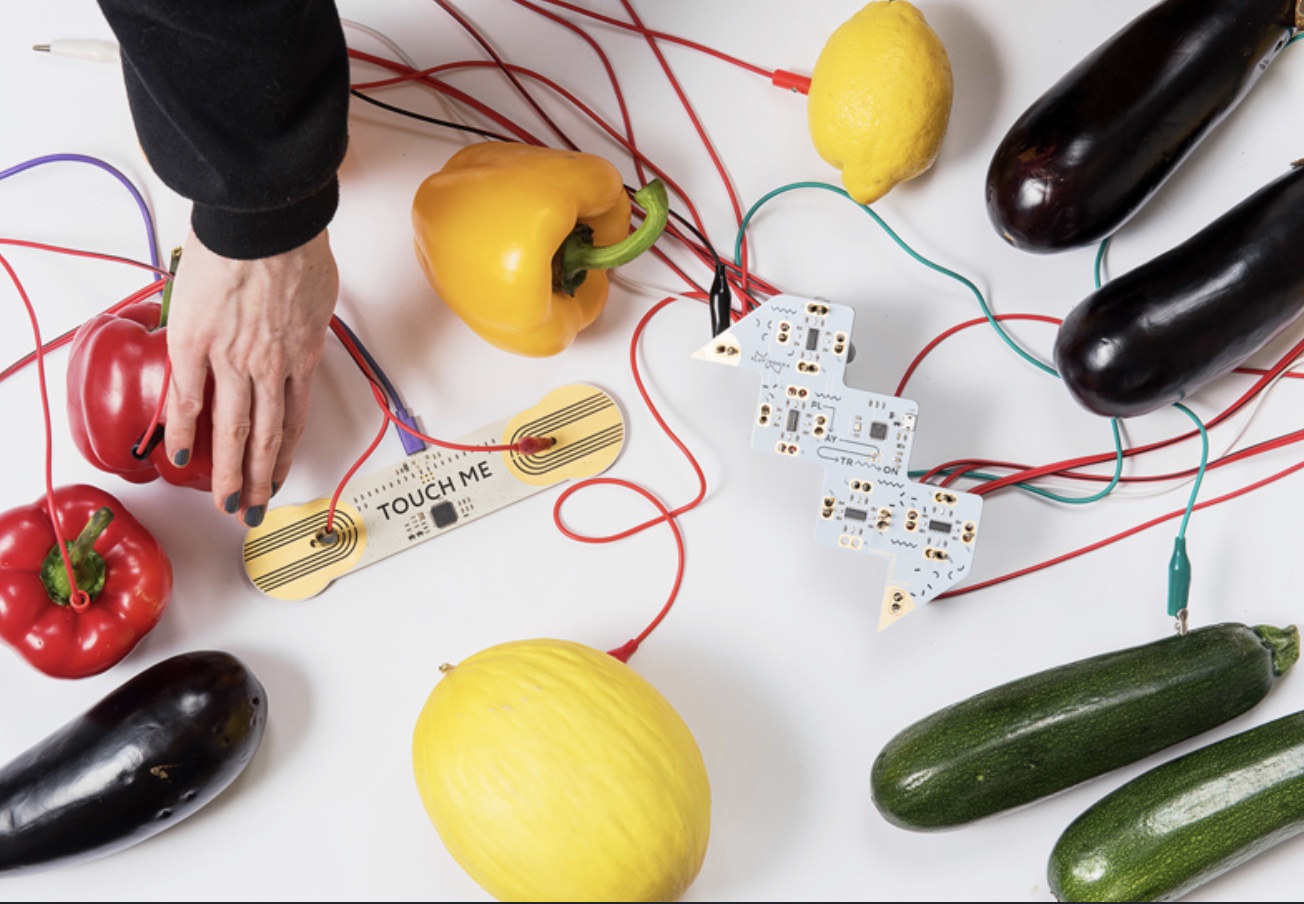
● Fully embrace controllerism and create an instrument out of taxidermy gerbils and bananas.
● Pre-program an entire song into a midi sequencer and press play, set the microphone down, and go do some shots at the bar with your mom. I mean, at least you pressed play?
● Build up a collection of loops and start/stop collections of those loops at the same time
[ Electronic Music Groovebox Sampler Dawless Performance Setup ]
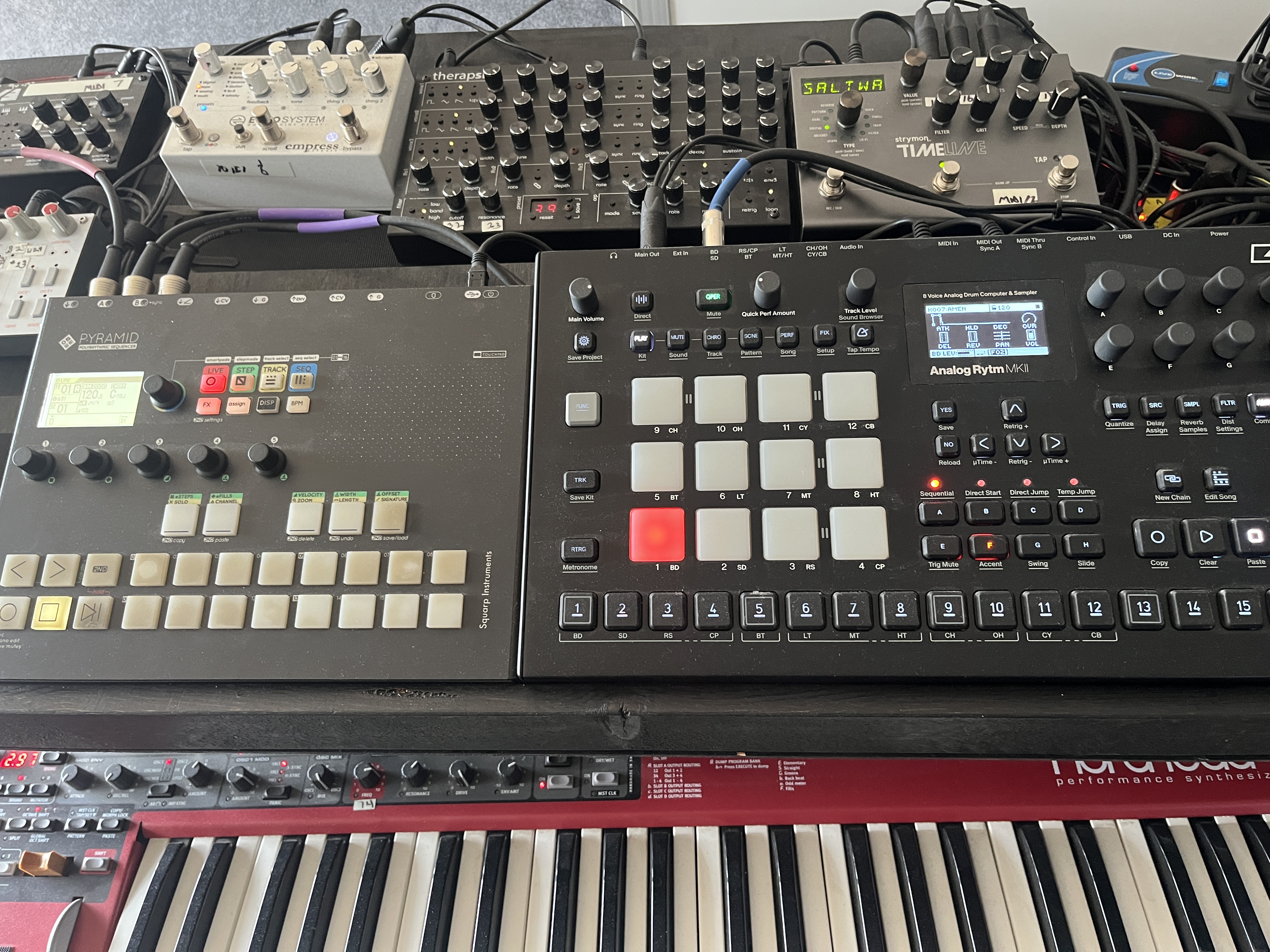
How many sequencers can a single musician even use simultaneously? For upcoming record Hyperspace at least 4.
How you build and perform your music is up to you; there’s really no limit (minus maybe your budget and how much you enjoy soldering cables).
How many sequencers can a single musician even use simultaneously? For upcoming record Hyperspace at least 4.
While hardware electronic music has overlap with what can be done in a DAW, it also comes with severe constraints and new opportunities. We still work with synths, sequencers, effects, and mixers but the music at its core is live and created within your system’s limitations; that system being of your own design. Dawless is not a replacement for how electronic music is made, but a different approach entirely.
Did you think I was joking? Controllerism is a whole thing though related in many ways and usually not involving perishables, check it out sometime.
[ Controllerism Fruit Instrument Experimental Midi Controller ]
Did you think I was joking? Controllerism is a whole thing though related in many ways and usually not involving perishables, check it out sometime.
Opportunities and Challenges
Here’s a few opportunities and challenges Dawless has versus a DAW.
Opportunities:
● You will have a universally unique sound and performance
● Music becomes very tactile - knobs, pads, and keys oh my. This is WAY better than using a mouse.
● You choose your limitations and those limitations become a part of your style and sound
● Push your skills, then push them some more.
● I’ve never had more fun making my music
Challenges:
● Each piece of gear is a unique and special performer in your band. You’ll have to navigate each band member’s ego to make your music. I’m not even kidding.
● Reality somehow manages to thwart technology in peculiar, time consuming ways.
● You don’t have enough space or money. And your mixer is too small and too big at the same time.
● Gear will feel super limited when compared to the common audio plugin and drawing in automation with your mouse. I see this as a good thing but your sweet DAW skills only partially transfer and you have to learn to make music within your new self inflicted constraints.
● This is more stuff to carry to a gig than a usb stick and a macbook.
Inspiration
Everyone has a different story around this but I thought I’d share mine.
Around 20 years ago I was in audio school in college, well before I discovered Next Level Sound. In those days it was pretty common to try and teach everyone Pro Tools (“its the industry standard” lol) and my program also had some really generic music technology courses like “mixing music”. While I wouldn’t say my mixes were good until Next Level Sound, I still learned a lot in this program and it had some stand out memories for me.
Our teacher would try to bring in “industry professionals” so all of us bright eyed youngsters could pelt them with questions about all things professional music. One particular day he brought in his friend who was an Oakland, CA based hiphop audio engineer. This was like a 60 year old italian dude in a jumpsuit who wore gold chains; I can’t remember the guy’s name but his swagger was ever lasting I suppose.
At some point he starts talking about this idea that a mix engineer should understand what something sounds like in the real world before trying to mix it. I’ll paraphrase, but the example he used was something like this:
How are you going to know what a violin sounds like if you’ve never gone to the orchestra?
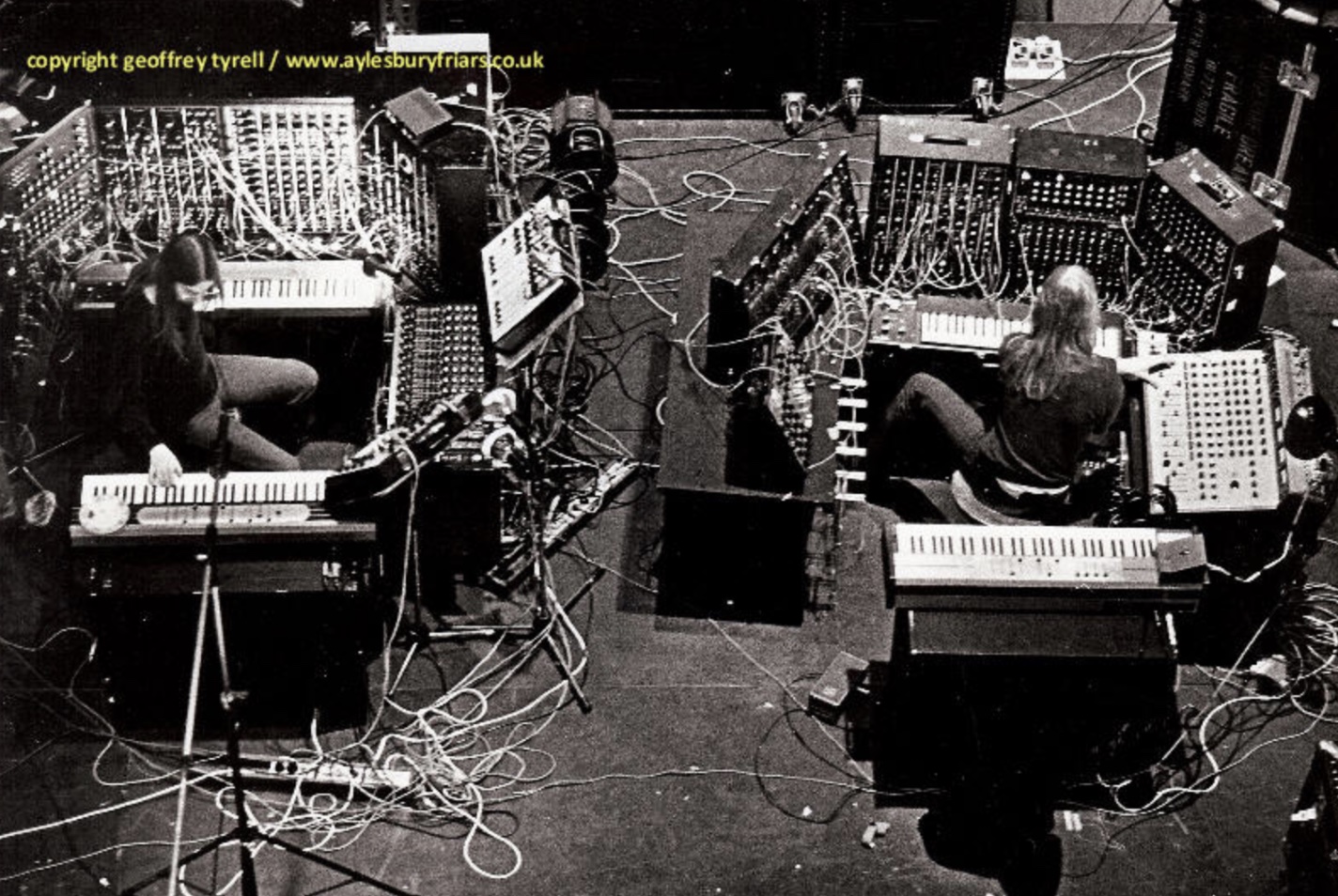
As an electronic musician this got me really thinking about what authentic electronic music would sound like assuming there was such a thing. Going back to the 70s, I remembered one of my favorite electronic artists Tangerine Dream, pictured below. One thing that was different back in the day was there was no computers at all, every sound would be made by an instrument of some kind; much like a jazz band but with pile of Moogs and noticeably absent of DJs. Tangerine Dream was a dawless electronic act far before a DAW even existed and they used all hardware synthesizers.
[ Tangerine Dream Live Analog Synthesizer Performance Vintage Setup ]
As the years passed these ideas stuck with me; that electronic music could be produced without a computer and performed without a DJ. And I just had to know, What does electronic music sound like when it is made right here, in the real world?
Until Next Time…
Thanks to Next Level Sound I’ll be able to break down my music making and recording process over the coming weeks. While I don’t propose a manifesto on making music for the modern era, I can promise a compelling tale of trials and tribulations. And perhaps a few opportunities for me to dive into some really nerdy music tech stuff. Stay tuned, I will be back.
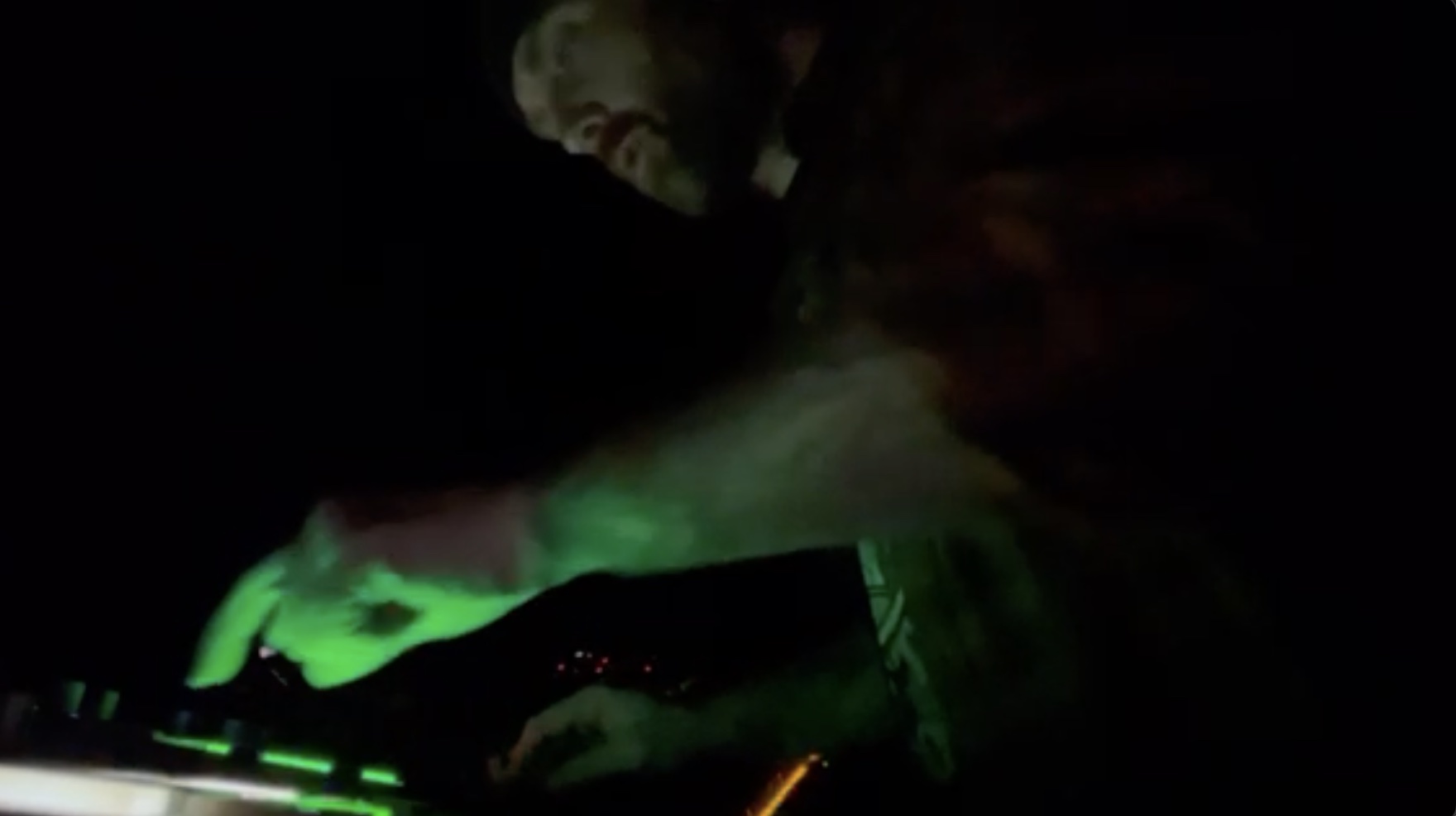
[ Carl Cosmos Performing ]
About the Author
What’s up yo?
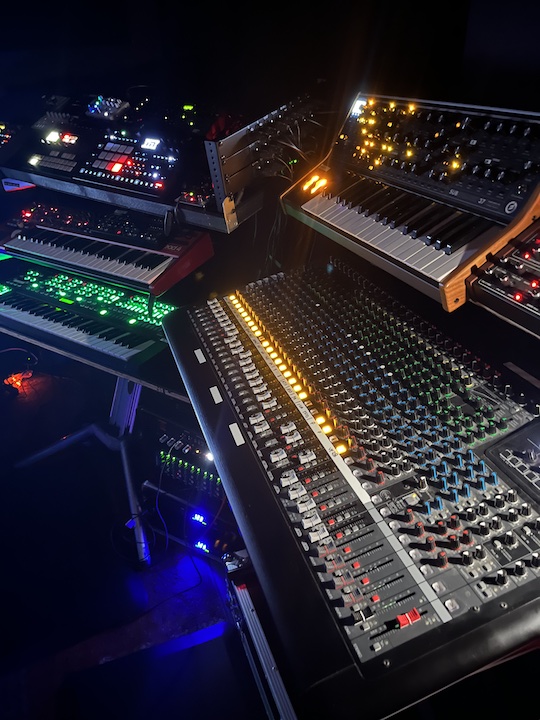
Carl Cosmos produces and performs music as vt100. While he got his start in DAW based music production, he has focused on dawless electronic music production for the last 15 years across varied genres. Electronic music rooted in reality and time, through vt100 he pursues a new authenticity for electronic music. He often refers to his dawless synthesizer setup as a “spaceship” due to the visible controls; it currently consists of 26 distinct pieces of gear focused around analog and digital subtractive synthesis, FM synthesis, and SID (“chip”) synths with the very occasional sample dropped in for good measure. Currently he is working on vt100’s fifth studio album Hyperspace and recently enrolled in the Next Level Sound mixing and mastering program.
Stay connected with news and updates!
Join our mailing list to receive the latest news and updates from our team.
Don't worry, your information will not be shared.